
Course 1
Production Processes
Module 2 Course 5
Maturation Process
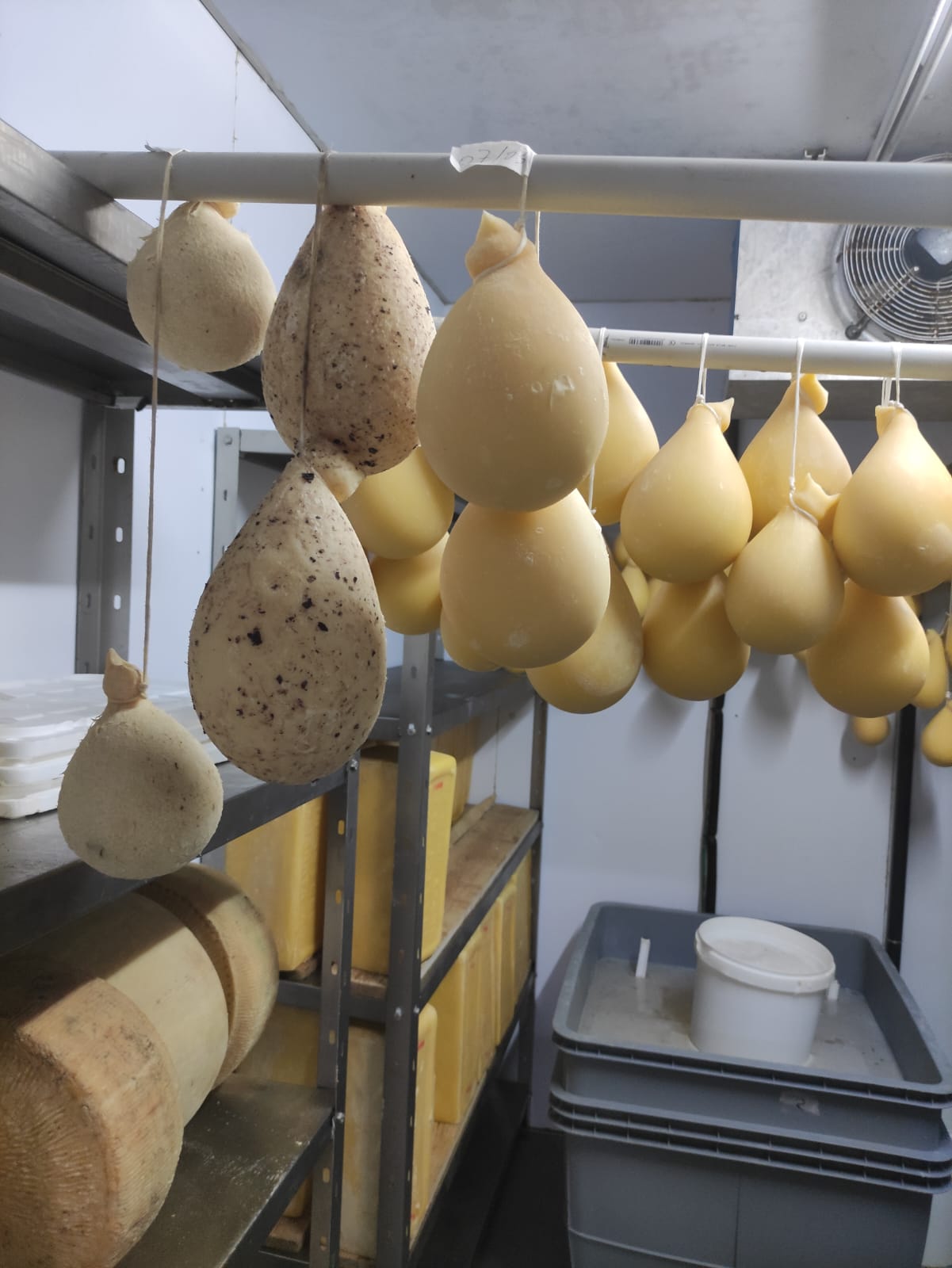

Ripening of Cheese
Cheeses are formed by microorganisms and enzymes. The first ingredient of cheese is curd, which is a coagulation product. Curd is a whitish colored, soft consistency and bland tasting substance. Curd needs to go through a series of stages to turn into cheese. Some cheeses are eaten as soon as they are made, these types of cheeses are called cheeses that are eaten before ripening. In general, cheeses are consumed after a short or long ripening phase.
Ripening: It covers all microbiological, chemical and physical events that occur from the time the cheese is made until it develops its unique characteristics. Cheese gains its typical characteristics in this way. The place and form of ripening vary from cheese to cheese.
Perfect ripening of a cheese is possible, first of all, with the presence and activity of microorganisms that play a role in ripening. Cheeses are generally matured in places with low temperature and high humidity such as caves, cellars, cold storage facilities or specially constructed rooms. Maturation is carried out in packaging (dry or in brine in tins, cubes or plastic canisters, dry in leather bags, pots etc.) or in open form.
Ripening varies depending on the type of cheese. This period is short for soft cheeses and long for hard cheeses. Each type of cheese ripens under the influence of different microorganisms. Therefore, the temperature and humidity levels at which cheeses are ripened are also different.
During ripening in cheeses, lactic acid is formed as a result of enzymatic reactions such as glycolysis, proteolysis and lipolysis. In some cheese varieties, products such as propionic acid, acetic acid, ethyl alcohol and carbon dioxide are formed.
In addition, as a result of chemical interactions, peptides, free amino acids, amines, free fatty acids and similar substances are formed. As a result of these interactions, cheeses gain color, smell, taste, structure, texture and aroma characteristics depending on their type.
Inadequate and inadequate microflora usually results in the emergence of defective products. With sufficient amounts of beneficial microorganisms, it is generally possible to obtain good and high-quality cheese only by providing the necessary ripening conditions.
The ripening of cheeses is possible with the addition of starter cultures and their enzymes found in milk or later. However, in obtaining good cheese, there is no clear clarity as to which effects are caused by microorganisms and which effects are caused by enzymes. Microorganisms of cheeses are present in the food until the final stage of ripening.
Microorganisms Involved in Cheese Ripening According to Their Characteristics:
- Fermenting Microorganisms: The first stage of ripening is the transformation of lactose in the cheese into lactic acid, in other words, the fermentation stage. This process is carried out by Lactic Streptococci.
- Microorganisms that form pores in cheese: Bacteria break down lactose and convert it into lactic acid and carbon dioxide. Carbon dioxide gas forms pores in the cheese in the form of bubbles. Since different types of microorganisms form different pores, the type, number and size of these pores can also vary. For example, the large pores in gruyere cheese are formed by propionic acid bacteria, while the small pores are formed by lactic acid bacteria.
- Superficial microflora: Microorganisms that multiply in the uppermost parts of the cheeses provide the aroma and flavor of the cheeses.

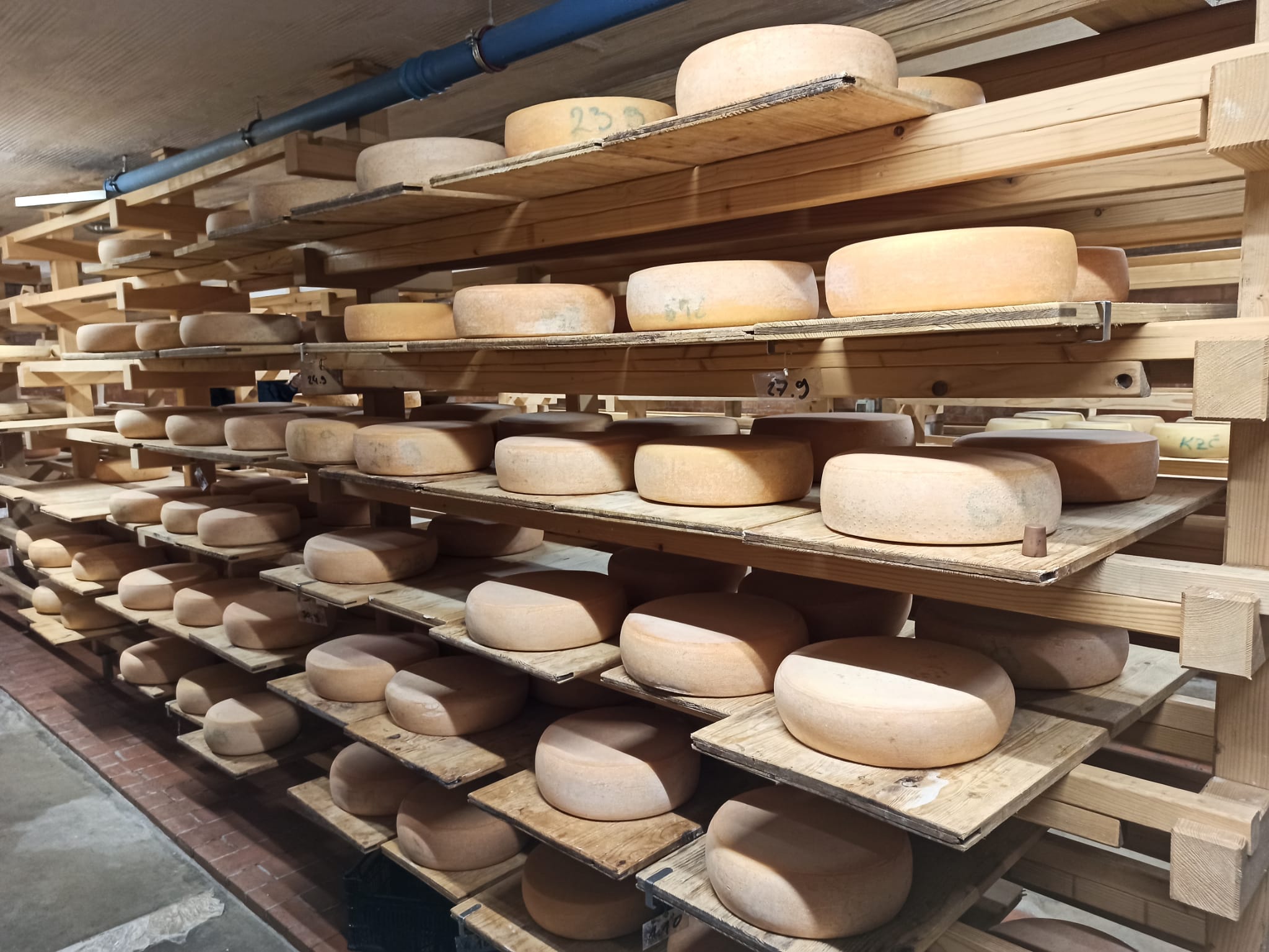
Storage of Cheeses and Maintenance of Warehouses
Cheeses that have completed their ripening period are stored in finished product storage rooms to be shipped to wholesale and retail sales points. Storage period varies depending on the type of cheese. Ripening in cheeses continues slowly during the storage period.
Proper storage conditions are achieved by adjusting the appropriate temperature and relative humidity. These conditions have a direct effect on factors such as ripening rate, weight loss, shell formation, and surface flora development.
Cheeses in the Cheddar group are generally ripened at low temperatures and in a relative humidity environment of less than 80%. These types of cheeses are packaged in plastic containers and bags before being offered for sale. The ripening period varies from a few months to 10 months, depending on customer demand.
The relative humidity in the storage areas, which is an important factor in ripening, decreases over time despite all precautions. To eliminate this situation, low-pressure steam is occasionally given to the storage area to adjust the storage humidity.
In addition; volatile metabolic products and some volatile compounds separated from the cheeses in the warehouse cause the warehouse atmosphere to become polluted and its composition to change. In order to change the warehouse atmosphere, fresh air should be given into the warehouse from time to time. In this way, the concentration of poor quality air in the warehouse is reduced.
Fresh air should generally be taken into the storage at night when the outside air is relatively cold. This process is carried out with a special system. Air is taken in from the outside through special filters.
Storage temperatures are generally between 4 and 8 degrees, but if long-term storage is desired, these temperatures should be lowered a little more.
Care of Cheeses During The Maturing Process
After the salting process, salt particles usually form on the surface of the cheese and in this case, liquid continues to come out of the cheese. In order to prevent this, the salty surface is dried a little with a process called dripping before the cheeses are taken to the ripening warehouses.
At this stage, the containers in which the cheeses are placed are slightly inclined. A slight air current is also given to the dripping chambers. This process can take from a few hours to a few days at 8-15 degrees, depending on the type of cheese.
After the dripping process is completed, the cheeses are transported to the ripening rooms. The most important factor here is that all cheese types must be turned during storage so that the cheeses do not lose their shape and ripen homogeneously.
In case of rind cheeses, the turning process is done every day at the beginning until the desired rind formation is achieved. After sufficient rind formation is achieved and the ambient temperature is lowered, the turning process, that is, turning upside down, is done from time to time.
The purpose of crust formation: To protect the cheese from microorganisms, mechanical damage and to prevent drying. The crust contains less moisture than the other parts of the cheese. The most important stage of crust formation begins with the evaporation of water from the cheese during the storage process.
The level of formation of the rind is determined by temperature, humidity and air circulation in the storage. Continuous and dynamic air circulation causes rapid evaporation of water from the cheese surface and the development of cracks on the surface.
Rindless cheeses: Rind formation can be prevented by covering with a suitable packaging material immediately after the salting process. Packaging also provides protection against microorganisms and mechanical damage.