
Course 1
Production Processes
Module 1 Course 3
Production Defects


Production Defects
In the stages from traditional cheese production to consumption, the lack of knowledge of employees about food safety and basic hygiene rules causes production defects and errors.
The ability of a product offered as a local cheese to find a place in the market, maintain this place, and compete is only possible by ensuring continuous efficiency in terms of production, maintaining quality, and manufacturing at the same quality.
Therefore, it is very important to consciously control production processes and the processes that follow production.
In this context, it is necessary to establish standards in terms of both product quality and public health and to establish a security chain that covers every stage of the milk's journey from farm to table to cheese.
Cheese has a rich microflora. Especially lactic acid bacteria have an important place in this flora. For ripening to occur, the presence of a large number of microorganisms is not enough. The dominant microorganisms that will actually make ripening happen must be present.
Inadequate and inadequate flora usually results in defective products. With the presence of sufficient numbers of beneficial microorganisms, a good quality cheese can only be obtained under the necessary ripening conditions.
Heat-resistant bacteria that cannot be killed by pasteurization or various microorganisms that can be transmitted during the production process can easily develop and dominate the environment, causing various defects in cheeses.
In this context, we can briefly summarize the basic quality factors that must be carefully monitored to prevent cheese losses with Good Manufacturing Techniques.
Basic Quality Factors to Monitor
- Raw material quality
- Technological processes applied to milk
- Starter culture type
- Non-starter lactic acid bacteria
- Coagulation method and clot processing
- Salting
- Quantity and quality of additives
- Maturation conditions
- Storage conditions
- Tools and equipment used
- Suitability and quality of packaging material
- Knowledge and skills of personnel
- Cleaning and sanitation
Cheese quality also depends on the hygienic conditions of the business, the quality of the milk, the knowledge, experience, and expertise of the cheesemaker, the microflora of the cheese, and the suitability of ripening conditions.
Defects in cheese can be prevented by monitoring critical control points determined according to the cheese production process. When the production process from raw material to sales points is taken into consideration, cheese defects can be examined in three groups according to their origin.
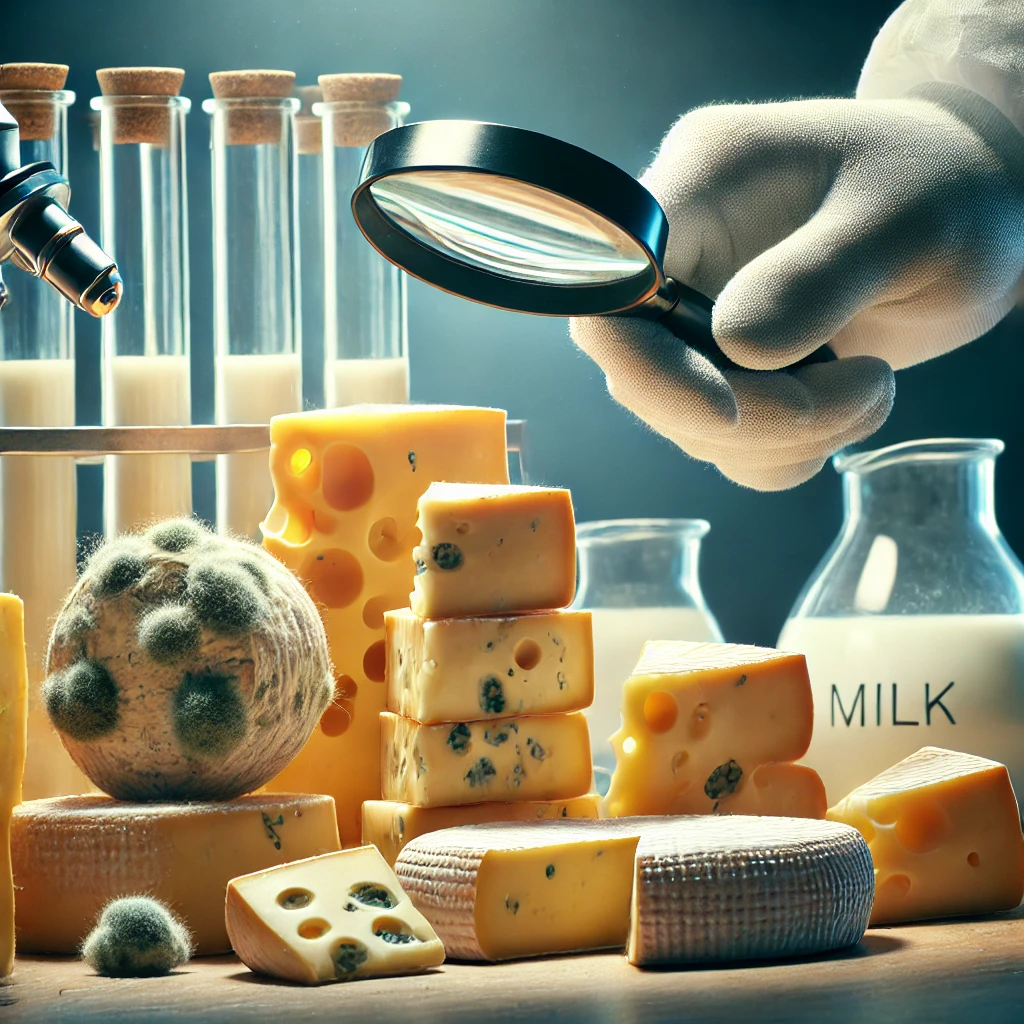


Defects originating from the quality of the milk used in production
Cheese is a complex matrix formed by milk protein, fat, lactose, water, and minerals. The most important element here is the quality of the raw milk. High-quality products can never be obtained with low-quality raw materials. This is a basic rule. Therefore, the chemical composition and microbial load of raw milk, which is the primary raw material for cheese, are crucial for preventing local cheese losses and defects.
Milk to be processed into cheese must be fresh, have its natural color, smell, and taste, and must not contain any residue of preservatives (such as antibiotics, cleaning agents, and disinfectants). No such substance should be added. The number of microorganisms in raw milk must be low, its physical and chemical composition should be unique to local cheese types, and fermentation, rennet, and coagulation tests must be positive.
In traditional local cheese production methods, the natural microflora from raw milk is considered sufficient, and the cheese is ripened accordingly. However, this often results in undesirable pore formation and spongy texture defects due to coliform group microorganisms present in raw milk. Hence, ensuring the quality criteria of incoming milk is essential for maintaining traditional cheese quality and preventing defects.
Milk from animals that are considered abnormal, contain colostrum, are at the end of lactation, or have mastitis should not be used in cheese production. These types of milk cause production losses and defects.
Defects Caused by Specific Milk Types
- Colostrum-containing milk suppresses the development of starter cultures during cheesemaking due to high levels of immune globulins (lactenin 1-3).
- Milk containing preservatives causes similar cheese defects.
- Post-lactation milk, due to its altered salt and protein levels, leads to cheese defects.
- Mastitis milk poses health risks due to its different chemical composition. Its high serum protein but low casein content causes low cheese yield, soft cheese formation, retention of whey, curd drying failure, and undesirable microorganism development in the curd.
The Role of Fat in Cheese Quality
Milk fat significantly affects cheese yield and defects. Fat influences many properties of cheese, including its composition, yield, flavor, and microstructure. It also impacts the biochemical, textural, functional, and rheological characteristics of cheese.
In local cheeses, fat acts as a filler by embedding itself between the protein network, increasing fluidity and reducing the density and continuity of the casein matrix. Since fat carries many lipophilic compounds, it not only shapes flavor but also enhances satiety by contributing to the cheese's oiliness. Additionally, fat maintains the integrity of the protein matrix, preventing rough texture formation and improving the mouthfeel during chewing.
Sensory Impact of Fat in Cheese
- Sensory parameters such as consistency, softness, absorption, adsorption, stickiness, and coating sensation are influenced by fat.
- Milk fat reflects light, giving cheese a matte surface and enhancing its color perception, which is an important criterion for buyers.
Functionally, fats influence melting points, viscosity, structure, crystallinity, and workability of cheese. Reducing fat content in local cheeses can result in undesirable properties during cooking. For example, reducing fat increases protein interactions and concentration in the cheese matrix, leading to higher energy requirements for melting.
Low milk fat content results in lower cheese yield, increasing production costs per kilogram. Therefore, low-fat content in local cheeses can lead to rheological, textural, functional, and sensory defects, such as lack of softness, bitterness, poor taste, low solubility, and undesirable color.
Impact of Animal Feed on Cheese Quality
Some compounds found in animal feed in rural areas (e.g., bitter weed, buttercup, yarrow, cress, beet pulp, wormwood, marigold) can pass into milk and cheese, causing taste and odor defects. Feeding animals with large quantities of taste- and odor-affecting feeds such as rapeseed, turnip, wild mustard, or spoiled silage, as well as storing strongly scented substances near cheese, can alter its flavor and aroma.

Defects resulting from errors in the production process
Common Causes of Cheese Losses and Defects
The most common place for cheese losses and defects is the production phase. In local cheese production, yield losses and defects occur due to the inability to transition to standardized production and achieve consistency. Therefore, adopting standardized production methods and using standard raw materials is crucial.
In this context, issues such as the use of antibiotic-containing milk (defined as abnormal milk), raw milk with altered composition, processing milk subjected to high heat treatment, using insufficient or excessive amounts of yeast, using yeast with low or high strength, and failing to select the appropriate fermentation temperature in local cheese production result in problems with clot formation and yield losses.
The Role of Cheese Cultures in Milk Quality
Another critical criterion in maintaining milk quality is the selection of cheese cultures used during the maturation of milk. It is well known that in traditional cheese production, the microflora formed by microorganisms naturally present in raw milk and capable of maintaining their vitality are used, without the introduction of starter cultures. The natural flora of milk leads to the selective enrichment of bacteria that can thrive at cheese production temperatures, giving traditional cheeses their unique and distinctive sensory characteristics.
Another method used in obtaining cultures during traditional production is the use of whey (PAS) cultures derived from the previous day's cheese production. However, in traditional methods, the production process cannot always be controlled because enzymes are not consistently used during the pre-ripening process of milk. This lack of control can lead to quality issues and defects in the final product.


General defects that occur during the ripening process
Another important stage in cheese production is the ripening process. During this period, there is a delicate balance in the formation of flavor, taste, aroma, and unique structural features of local cheeses. Biochemical activities occur in sequence, which play a key role in this process. Factors such as the temperature, humidity, and hygiene of the environments where local cheeses are stored, as well as the enzymes, yeasts, starter cultures, and natural flora used during production, are significant in preventing losses and defects in local cheese.
During the milk processing and cheese-making stages, traditional tools and equipment used during storage and ripening (e.g., animal skin overalls, clay pots, smoking elements) must be carefully evaluated in terms of potential cheese defects and contamination. The use of traditional equipment is also important for ensuring food safety and public health.
Common Cheese Defects and Their Causes
- External Surface Defects: When white cheese is removed from the brine, it is often observed that the cheese rind and outer surface have softened by up to 1 cm during the pre-ripening or post-ripening phase, sometimes forming a mud-like layer. The causes of this issue include:
- Low fermentation temperature
- Insufficient yeast quantity
- Large breakage of cheese curd
- Excessive water retention due to inadequate pressing
- Low salt concentration and acidity in the brine
- Using old and unclean brine
- Low brine temperature, resulting in insufficient salting
- Very tight packing of cheeses during ripening
- Contamination of brine and cheese surfaces with salt-resistant yeasts
- Hot and humid pre-ripening conditions promoting proteolytic microbial activity
- Very Tight and Dry Consistency: Hardening can occur due to excessive addition of calcium chloride, improper pH control, or overly high fermentation temperatures. The following measures can help prevent this defect:
- Reducing CaCl2 and culture quantity
- Shortening milk ripening period
- Selecting normal fermentation temperatures
- Breaking the curd into larger pieces
- Reducing pressing pressure and time
- Lowering the pressing and pre-ripening room temperatures
- Soft Consistency: This type of cheese deforms easily under slight pressure and is difficult to remove from tins. The causes include:
- Use of watery raw materials
- Insensitivity of milk to rennet
- Low culture, CaCl2, and rennet quantities
- Short maturation time
- Low fermentation temperature
- Excessive cooling before pressing
- Low room temperature during pressing
- Soft, Oily, Sticky Structure: This defect results in cheese that sticks to the knife when cut and becomes sticky. The causes include:
- Large breakage of curd
- Poor curd processing
- Weak salting and storing in a warm environment before cold storage
- Cold storage operating above 5ºC
- Bitter Taste: Bitter taste in cheese may result from:
- Feeding dairy animals with spoiled or low-quality feed
- Milk from older animals or animals with mastitis
- Residues of cleaning and disinfecting agents in milk
- Use of frozen and re-liquefied milk
- Overuse of microbial rennets and certain cultured bacteria (e.g., Sc. lactis, Sc. cremoris, Lb. bulgaricus)
- Presence of heat-resistant bacteria such as Sc. liquefaciens
- Pore Formation: Pores in cheese are formed due to mechanical processes during curd processing or gas-forming microorganisms. While pores are desirable in some cheese types, they are considered defects in others. Pore formation is caused by:
- Presence of coliform bacteria (e.g., Escherichia coli, Klebsiella aerogenes) or Clostridium species (e.g., Cl. tyrobutyricum, Cl. butyricum)
- Use of raw milk instead of pasteurized milk
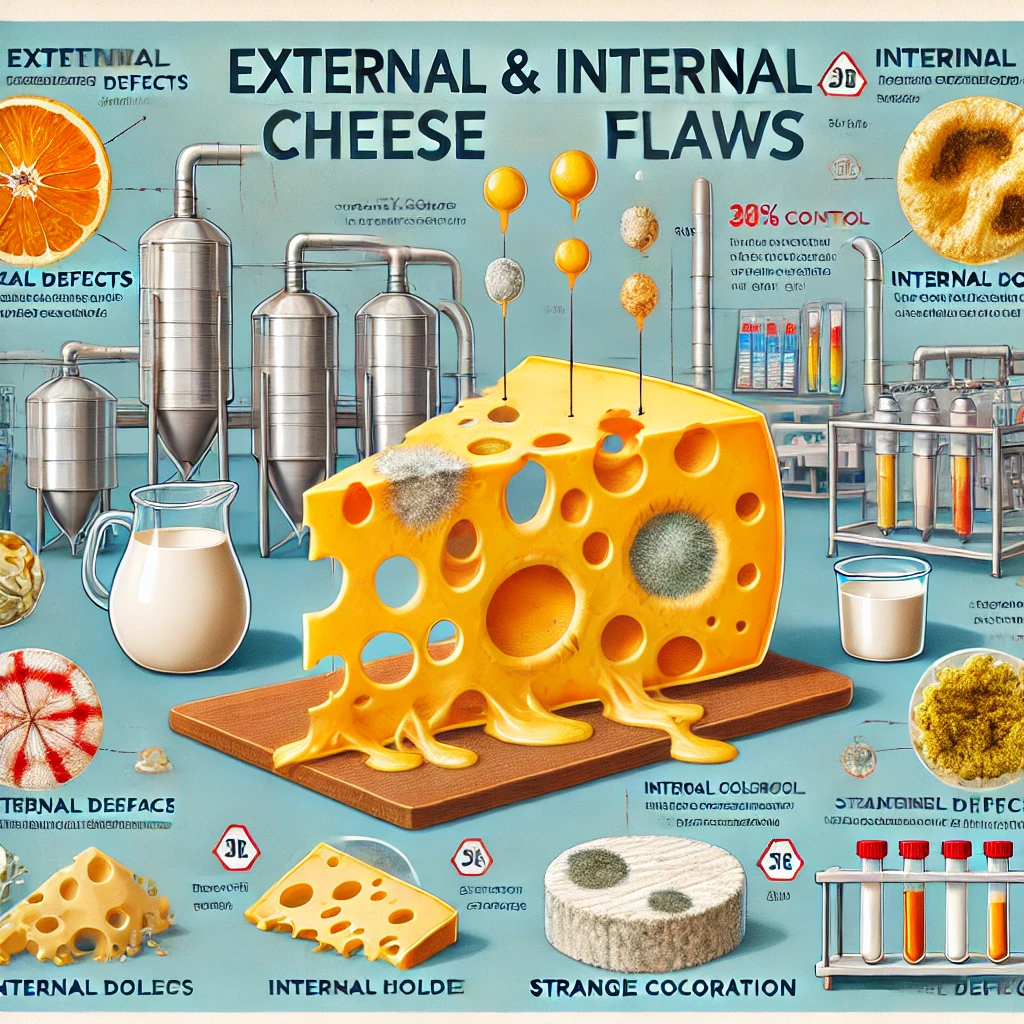
Cheese Defects
Appearance Defects
- Defects in shape
- Color defects
- Skin and shell defects and defective coatings
- Defective schmiere (smear) layer
- Faulty molding in cheeses with moldy surfaces
Internal Defects
- Color defects
- Eye formation in cheese
- Consistency and texture errors
- Smell and taste errors
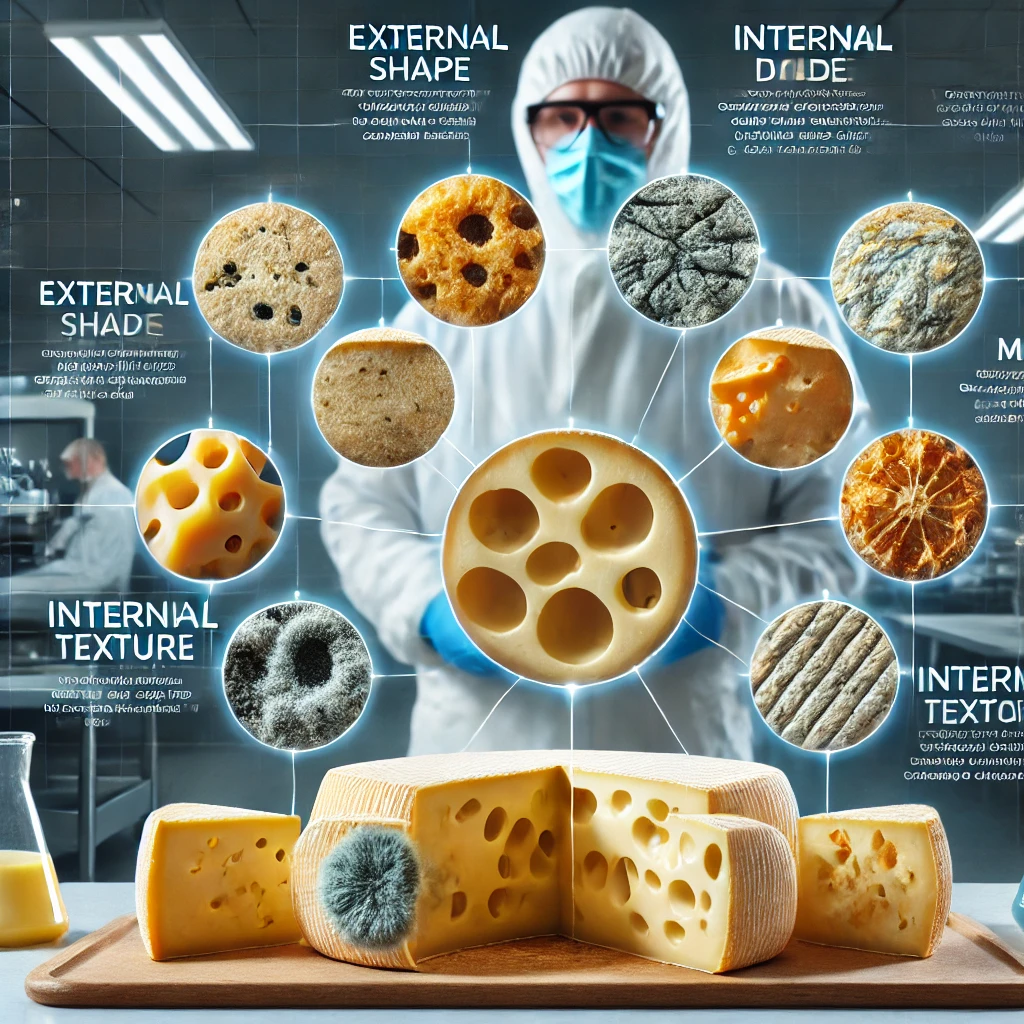
Diaper defects
Using the press cloth incorrectly during compression
Shattered shell
faulty cutting and excessive pressure on the mold corners or insufficient pressure and under-salting are among the causes.
Dirt
Cheese placed on dirty surfaces, inadequate cleaning before packaging, dust particles
Lightening of color / Spotted cheeses
The formation of different colors (brown, yellow, black) is due to the colonies formed by microorganisms.
Blue or brown spots
Copper particles originating from equipment cause blue color, while rust particles cause brown spots. Molds play an important role as color defects. Molds create blue, green, and black spots on cheeses. In addition, cheeses exposed to sunlight may also experience color fading due to oxidation of fat. Rust stains due to the use of rusty tools and equipment, and pink spots due to excessive nitrite use are among the color defects.
Acid section
Color of the cheese turning white or light colored areas being seen. It occurs due to the formation of excess acidity.
White oily crust
It is caused by yeast in cheeses where heat treatment is not applied sufficiently.
Hard and dry structure
High fermentation temperature , excessive yeast strength and/or yeast, addition of high levels of calcium chloride, cutting the curd too small, mixing the curd at very high temperatures, using low-fat milk, over -salting, prolonged pressing and drying are among the reasons.
Shell softness
It is seen in hard cheeses that are turned before one side is completely dry and not salted enough.
Flourish and loose structure
Cheeses with high acidity, weak proteolytic activity or high moisture content are the causes of loose structure.
Crystallization, Sandy Structure and Edge Formation
large crystal masses formed by calcium and lactate and/or calcium and phosphates together, Heating the curd at high temperatures, low water content of fat- free cheeses
Soft structure
It is a defect seen in cheeses with high humidity, contrary to hard cheeses. The soft structure is caused by the use of fatty and low acid milk in cheese making, fermentation at low temperatures, use of small amounts of yeast, cutting the curd thickly, keeping the pressing time short and using small amounts of salt.
Spongy structure
It is the condition of not having sufficient rigidity due to the presence of excessive gas or structural voids. Excessive gas formation is seen together with high humidity and weak structural defects.
Rubbery structure
in fresh cheeses that do not have enough acidity development . When pressure is applied to the cheese with a finger, it resists the pressure and returns to its original state.
White and Gray Caries
Clostridium sporogenes and Bacillus putrifucous species cause white-colored rots. Proteolytic bacteria cause gray-colored rots .
Porosity
bacteria breaking down lactose and producing gas (H2 and CO2 ) . In cheese technology, gas formation can be caused by coliforms, anaerobic spore bacteria and yeasts. The swelling caused by coliforms and yeasts is called "early swelling", while the swelling caused by C. butyricum and C. tyrobutyricum is called "late swelling".
Fruity aroma
It tastes like ripe fruit or artificial pineapple. Milk from cows fed fruit causes this defect. It is also caused by the growth of Pseudomonas fragili in cheese.
Salty taste
Excessive dry salt addition is seen in cases such as using brine with high salt content, keeping the cheese in brine for a long time, keeping the salting temperature high, etc.
Sour taste
low quality milk, inadequate heat treatment, looseness of the curd, excess water remaining in the curd, and excess acidity. It is also caused by the addition of excess culture, high ripening temperature, and excessive growth of acetic acid bacteria.
Bitter taste
The factors that cause this disorder are the abundance of microorganisms that break down proteins, the brine not being used for a long time without being disturbed or changed, the dry matter fat content being too low, the use of low quality milk or starter. In addition, it can be seen as a result of the compounds contained in some plants used in feed passing into the milk, the use of milk from animals with mastitis, the use of high levels of nitrate, and the use of excessive yeast.
Rancid taste
The heat-resistant lipolytic enzymes of psychotrophic bacteria contaminating milk cause first hydrolyzation and then oxidation in milk fats, creating a rancid taste.
Malty Flavor
Some subspecies of Streptococcus lactis can produce compounds that resemble a malty taste and odor. These bacteria can be transmitted through poor hygiene, contaminated equipment and water.
Fermented Flavor
Flavor caused by alcohol, acetic acid and propionic acid formed by yeast, mold and propionic bacteria contaminating milk and cheese, especially in production where hygienic conditions are not provided.
Metallic Taste
The water used in cheese processing contains high levels of iron or manganese, and metal contamination from tools and equipment due to abrasion.
Sweet Taste
Some microorganisms perform an abnormal proteolysis, which produces sweet-tasting metabolic products. This formation is facilitated by insufficient acidification of milk, as well as poor salting of cheeses and high pressing and ripening temperatures.
Nutty Smell (garlic, potato smell)
The feed odors have been absorbed through the respiratory and digestive organs of the dairy animal. Raw milk has come into direct contact with the barn air and strongly scented feed.
Yeast flavor
that have a dominant alcohol smell and are also formed in the gutters. It is caused by some types of yeast that settle in contaminated brines, especially in establishments where inadequate hygiene is applied.
Bland Taste
It is the situation where flavor and aroma do not develop in cheeses. It can be seen in cases where abnormal milks , milks containing detergent and disinfectant residues are used. Incompletely ripened or not adding starter culture after heat treatment or using inactive cultures, low ripening temperature, excessive salting, heating boiler milk at very high temperatures and for a long time, milk that has not been sufficiently pre-ripened is processed into cheese.
Burnt taste
Streptococcus lactis var. maltigenes can produce compounds that resemble the flavor of overcooked or burnt milk . Smoked cheese varieties are made at very high temperatures.
Fruity Taste
Low quality milk or starter cultures.
Ammonia Smell
Milk actually contains 1.3 - 2.5 mg / liter of ammonia (NH3 ) . However, it is not considered normal for this value to exceed 5 mg / L. In case of storage of soft cheeses with low fat and high water content in hot conditions and for a long time, it is formed by the rapid development of surface microflora.
Aggravated ( about to spoil) and Moldy Smell-Taste
spoiled, strong-smelling milk , using old, stale and moldy rennet, inadequate production hygiene and using dirty brine.
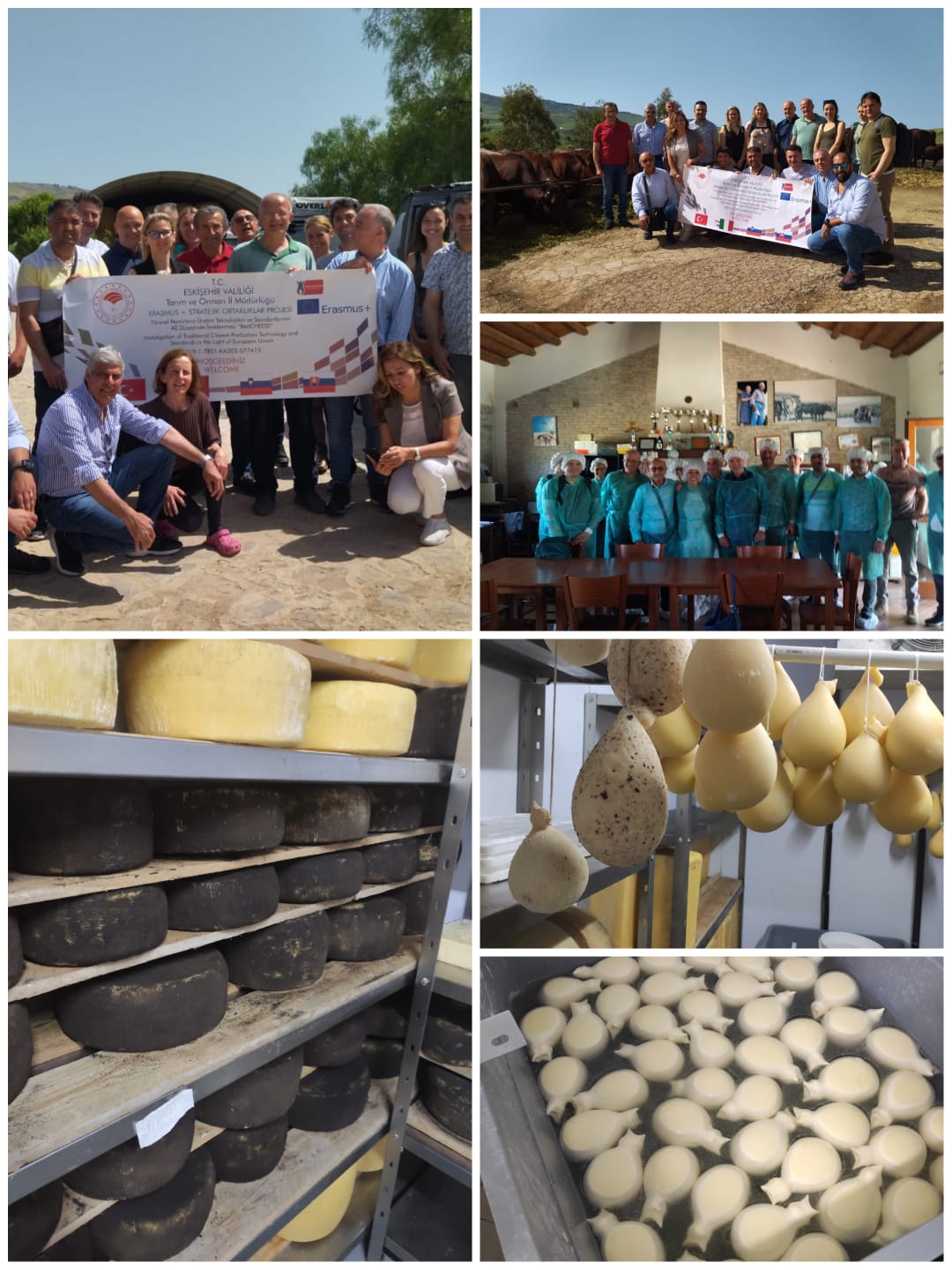
Module Suggestions
As a result, while local cheese defects are valid for all businesses, the fact that production is still not standardized in many local businesses and the use of pasteurized milk and starter cultures is not widespread are among the main reasons for quality defects in cheese.
Therefore, when these risks are examined, the most important defects expected to be encountered in traditional cheese production are hygiene defects. It is essential to determine critical control points throughout the production process, starting from the time the milk is taken to the cheese production area, and to take precautions against possible food safety violations by determining the risks at these points.
Although these inspections are carried out in industrial-scale production and small and medium-sized enterprises as required by law, this is not possible in rural areas and family businesses where production is done traditionally. Cheese losses due to hygiene defects can be marketed if not inspected or can spread into the environment because the necessary disposal conditions are not met, leading to serious food safety and public health problems.
Therefore, it is necessary to apply good production techniques in the mentioned processes in cheese production and to monitor and control the main factors that can cause defects. In summary, when all these processes are considered, it can be seen that the defects encountered in cheeses can be caused by:
- Quality of the main raw materials
- Lack of standardization
- Lack of hygiene and sanitation in the business
- Environmental factors
- Inadequacies in production techniques
- Inadequacy of qualified personnel
Therefore, standardization while preserving traditional methods in cheese production is important in terms of economic costs, public health, and controlled traceability of cheese defects.
As a result, minimizing the common defects in cheeses, in other words, extending the storage period, using good quality milk, applying pasteurization processes to milk, using good quality starter culture, choosing good quality yeast, ripening under appropriate conditions, selecting an effective packaging method, employing qualified personnel, ensuring standardization in local cheeses, using modern and new technologies in traditional cheese production, and paying attention to business hygiene and sanitation are recommended to reduce the defects that may occur in local cheeses.