
Course 1
Production Processes
Module 2 Course 4


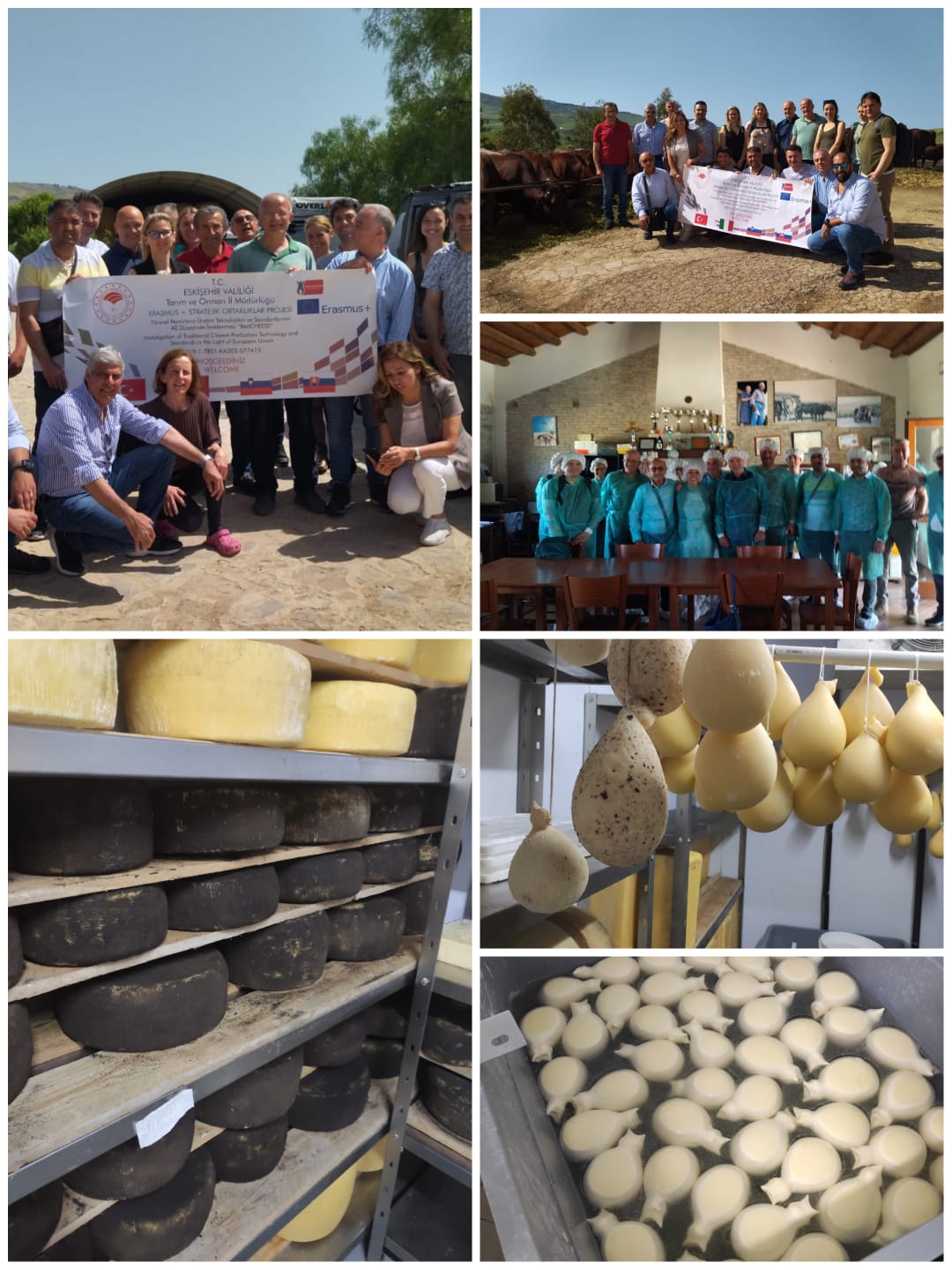
The milk of some animals such as cows, buffalo, sheep, and goats is consumed as human food and converted into dairy products.
Milk is a substance synthesized by healthy, unworked, uninterruptedly milked animals to feed their young. In order to make quality traditional cheese varieties, it is necessary to use quality raw milk. It is important that raw milk is produced and processed in a way that is appropriate from farm to table, under conditions that will not reduce its quality or, consequently, the quality of the product. Therefore, in order to gain a healthy perspective on milk, the process from production to consumption must be considered holistically.
In this context, the quality of raw milk to be used in traditional cheese production must meet criteria in accordance with legal regulations and must be of high quality.
Quality raw milk is milk obtained by hand or automated milking of healthy animals under hygienic conditions, rapidly cooled to +4-8°C, with its own unique color, taste, structure, and composition, without any external substance (water, soda) added, and without any substance (milk fat) removed from its composition.
It can cause various health problems due to contamination from human, animal, and environmental zoonotic and non-zoonotic pathogens to which it is exposed as a result of possible hygiene deficiency at every stage of the process from production on the farm/barn to consumption.
- The milk used in cheese making must be suitable in terms of sensory, chemical, physical, microbiological, and hygiene criteria.
- If the milk is not cooled immediately after milking, the acidity level will start to increase, and the milk will curdle when heated.
- Milk that is not suitable in terms of chemical composition has a great impact on cheese quality.
- Milk with an unbalanced mineral content and milk from the first and last stages of lactation should not be considered suitable.
Cheese hygiene covers the health conditions of dairy animals, the hygiene conditions to be followed during raw milk production, storage, collection, and transportation, the characteristics of the tools and equipment to be used, the hygiene and health conditions of the working personnel, and the records to be kept and preserved by the producer.
Briefly, substances to indicate if necessary:
- Mastitis (breast inflammation) disease and milk in inflamed channels should not be used for cheese making.
- Milking hygiene and correct use of milking equipment are also important in preventing udder infections.
- For quality raw milk, animals should first be cleaned before milking, and animals with dirty udders, feet, and bodies should not be taken into the milking parlor.
- Milk with unsuitable chemical composition and disrupted mineral balance should not be used in cheese making.
- Milk immediately after birth or at the end of the lactation period should not be used for cheese production.
Sources of biological, chemical, and physical contamination of raw milk are tools and equipment. Therefore, all milking machines, buckets, filters, pipes, and systems must be clean and disinfected.
- It should not contain antibiotic, detergent, and disinfectant residues because they negatively affect the development of starter cultures in milk and the formation of cheese flavor and aroma.
- After cleaning and disinfection, it should be rinsed thoroughly with clean water, and no residue or contaminants should be left.
- Milking tools and equipment should be made of stainless steel or rubber material.
Coliform bacteria should not exceed 300,000 CFU/mL, and milk containing large amounts of toxic bacteria such as Clostridium and Bacillus should not be used. Milk acidity should not exceed the range of 6.0 SH to 7.0 SH, and the maximum storage temperature of raw milk should be between 6-8°C. Additionally, sensory evaluation should not score less than 4 out of 5 points.
Protein, fat, and dry matter ratios are also important. Changes in these ratios can negatively affect quality and yield. Rich milk with large fat globules (e.g., Jersey, Guernsey breed milk) may result in higher fat loss during cheese making, leading to fatty stains in the curd.
The quality of cheese is also influenced by the nutrition of the dairy animals and the types of feed used. Silage-fed animals may introduce anaerobic bacteria into the milk, which can negatively affect its quality. Milk containing antibiotics and preservatives can inhibit the formation of starter cultures, thereby preventing proper coagulation of the curd.